
Casino Slots Real Money UK — The Complete Independent Guide
RTP mechanics, volatility, UKGC rules, slot types, and smart-play strategy for informed players.

Best Non GamStop Casino UK 2026
Loading...
What Real-Money Slots Actually Involve in the UK
Playing slots for real money in the UK means depositing actual pounds into an account at a casino licensed by the UK Gambling Commission, spinning reels where every outcome is determined by a certified random number generator, and withdrawing genuine cash if you win. That last part is what separates real-money slots from everything else on the internet that looks like gambling but is not. Social casino apps, sweepstakes platforms, and free-to-play lobbies all mimic the experience, but none of them involve regulated stakes or legally enforced payouts. If no real money goes in and no real money comes out, it is not the same product, and it is not governed by the same rules.
The UK is one of the most heavily regulated online gambling markets in the world. Every operator that offers real-money slots to UK players must hold a remote operating licence from the UKGC, comply with strict conditions on game fairness, fund segregation, advertising, and responsible gambling, and submit to regular audits. The Gambling Commission does not treat these requirements as aspirational guidelines. Non-compliance results in fines that run into millions of pounds and, in serious cases, licence revocation. This regulatory framework is what makes the UK market distinct from offshore or grey-market alternatives where player protections are theoretical at best.
This guide exists because most content about real-money slots online is written to sell you something. Casino-operated pages exist to get you depositing. Affiliate sites exist to funnel you toward operators that pay the highest commissions. Neither has a strong incentive to explain the mechanics, the maths, or the regulatory context with any depth. This page is independent. It does not promote any casino, recommend any specific slot, or link to any operator. What it does is explain how real-money slots work, what the numbers mean, what protections exist, and how to make informed decisions if you choose to play.
The sections that follow cover the full picture: how outcomes are generated, what RTP and volatility actually tell you, the types of slots you will encounter at UK casinos, how UKGC regulation protects players, a structured approach to choosing a slot, the real cost of bonuses and wagering requirements, and the responsible gambling tools available at every licensed site. Each section is written to be read in order or accessed individually.
Real-money slot — an online slot game hosted by a UKGC-licensed operator where the player stakes real GBP, outcomes are determined by a certified random number generator, and winnings are paid as withdrawable cash. This excludes social casino apps, sweepstakes platforms, demo/free-play modes, and any site not licensed by the UK Gambling Commission.
How Online Slots Generate Results
Every spin begins inside a random number generator. Before the reels animate, before the symbols land, before any visual event occurs on screen, the outcome has already been decided by a mathematical process running on the game server. The spinning reels you see are a presentation layer, not a decision-making mechanism. They exist to make a predetermined result entertaining to watch. Understanding this distinction is the foundation of understanding everything else about how slots work.
Online slots are software programs. They run on remote servers operated by game providers such as Pragmatic Play, NetEnt, Play'n GO, and Big Time Gaming. When you press the spin button, your client sends a request to the server. The server's RNG generates a number, that number is mapped to a specific combination of symbols on the reels, and the result is sent back to your screen. The animation you watch is a replay of a decision that already happened. There is no skill element, no timing advantage, and no way to influence the outcome once the spin is triggered.
Random Number Generators and Certified Fairness
The RNG at the core of every licensed slot is a pseudo-random number generator, or PRNG. It uses a mathematical algorithm, seeded with an initial value, to produce sequences of numbers that are statistically indistinguishable from true randomness. The word "pseudo" is sometimes misunderstood as meaning "fake" or "rigged," but in practice, PRNGs used in regulated gambling are rigorously tested to ensure that their output is uniformly distributed, non-repeating over practical timescales, and independent from spin to spin.
Independence is the critical property. Each spin is a self-contained event. The RNG does not remember what happened on your last spin, your last session, or your last hundred sessions. There is no "due" payout, no cycle, and no pattern that a player could detect or exploit. The output is generated fresh each time, and the probability of any given outcome is identical on every spin regardless of history.
To ensure this holds in practice, UK-licensed games must be tested by accredited independent laboratories. The most widely recognised testing houses include eCOGRA, Gaming Laboratories International (GLI), BMM Testlabs, and iTech Labs. These organisations audit the RNG algorithm, verify that the published RTP matches the game's actual mathematical model, and certify that the results meet the standards required by the UKGC. Testing is not a one-time event; ongoing compliance monitoring and periodic re-certification are built into the regulatory framework.
Reels, Symbols, and Payline Structures
A slot's reels are a visual grid of symbols. The most common format is a five-reel, three-row grid displaying 15 symbols at a time, though variations range from the classic three-reel, single-row layout to Megaways engines displaying up to seven symbols per reel. The symbols are themed to the game's design, but their function is mathematical: each symbol has a weighted probability of appearing on each reel position, and winning combinations are defined by the game's paytable.
How those combinations are evaluated depends on the game's payline structure. Fixed-payline slots define a set number of lines across the grid, and winning combinations must land on an active payline from left to right. A 20-payline slot checks 20 specific patterns on every spin. Ways-to-win slots remove the payline concept entirely: a win occurs when matching symbols appear on adjacent reels in any position, typically offering 243 or 1,024 ways to win. Megaways slots take this further with variable reel heights that change on every spin, creating anywhere from a few hundred to 117,649 possible ways per spin.
Two special symbol types appear across virtually all modern slots. Wild symbols substitute for other symbols to complete winning combinations, functioning like a joker in a card game. Scatter symbols trigger bonus features, typically free spins or bonus rounds, when a specified number land anywhere on the reels, regardless of payline position. The mechanics vary by game, but the principle is consistent: wilds help you win more often on the base game, scatters give you access to the bonus game where the larger payouts tend to concentrate.

RTP and Volatility — The Numbers That Define Your Edge
Return to Player is the single metric that separates informed play from guesswork. Every slot has two numbers that define its mathematical behaviour: RTP, which tells you the theoretical cost of playing, and volatility, which tells you how that cost is distributed across your session. Most players check neither. The ones who do tend to make better decisions about which games to play, how much to budget, and when to walk away.
RTP is expressed as a percentage. A slot with a 96% RTP returns, on average, 96p for every pound wagered over millions of spins. The remaining 4p is the house edge — the operator's mathematical advantage and the price you pay for playing. This is not a per-session guarantee. You will not lose exactly four pounds for every hundred wagered in a single sitting. Over a short session, you might win substantially or lose everything. But over an enormous sample size, the numbers converge toward the published figure. The house edge is a statistical certainty across time; what is uncertain is what happens in any given session. That uncertainty is where volatility comes in.
House Edge Calculation
Slot RTP: 96.00%
House edge: 100% - 96.00% = 4.00%
Wager: £100
Expected cost: £100 x 0.04 = £4.00
For every £100 wagered at this RTP, the mathematical cost to the player is £4.00 on average. Over £1,000 in total wagers during a session, the expected cost is £40.
What RTP Tells You — and What It Doesn't
RTP is calculated from a theoretical model of the game's mathematics, typically simulated over tens of millions or hundreds of millions of spins. It reflects the long-run average return to all players across all sessions. It does not tell you what will happen in your next hundred spins, your next session, or your next month of play. A 97% RTP slot can deliver a losing session just as easily as a 94% RTP slot can deliver a winning one. The difference is the rate at which the house edge accumulates over time — and over enough time, it always accumulates.
There is a complication that many players are unaware of: variable RTP. Game providers often release the same slot with multiple RTP configurations, and the operator chooses which version to deploy. A game marketed as having a 96.5% RTP might be running at 94.0% at a specific casino. The UKGC requires operators to make the actual in-use RTP accessible to players, usually within the game's information screen or help menu. However, this information is rarely displayed prominently, and some operators make it harder to find than others. Before committing money to a slot, open the game's info screen and check the RTP listed there. If it is lower than the figure cited in reviews, you are playing a different version of the game.
The practical advice is straightforward. Use RTP as a filtering tool, not a prediction. Slots with an RTP below 95% are mathematically expensive. Slots above 96% offer a lower cost per unit wagered. Above 97% is above average. But none of these numbers promise a winning session. They tell you the long-run price — and the long run is always longer than your session.
Low, Medium, and High Volatility Compared
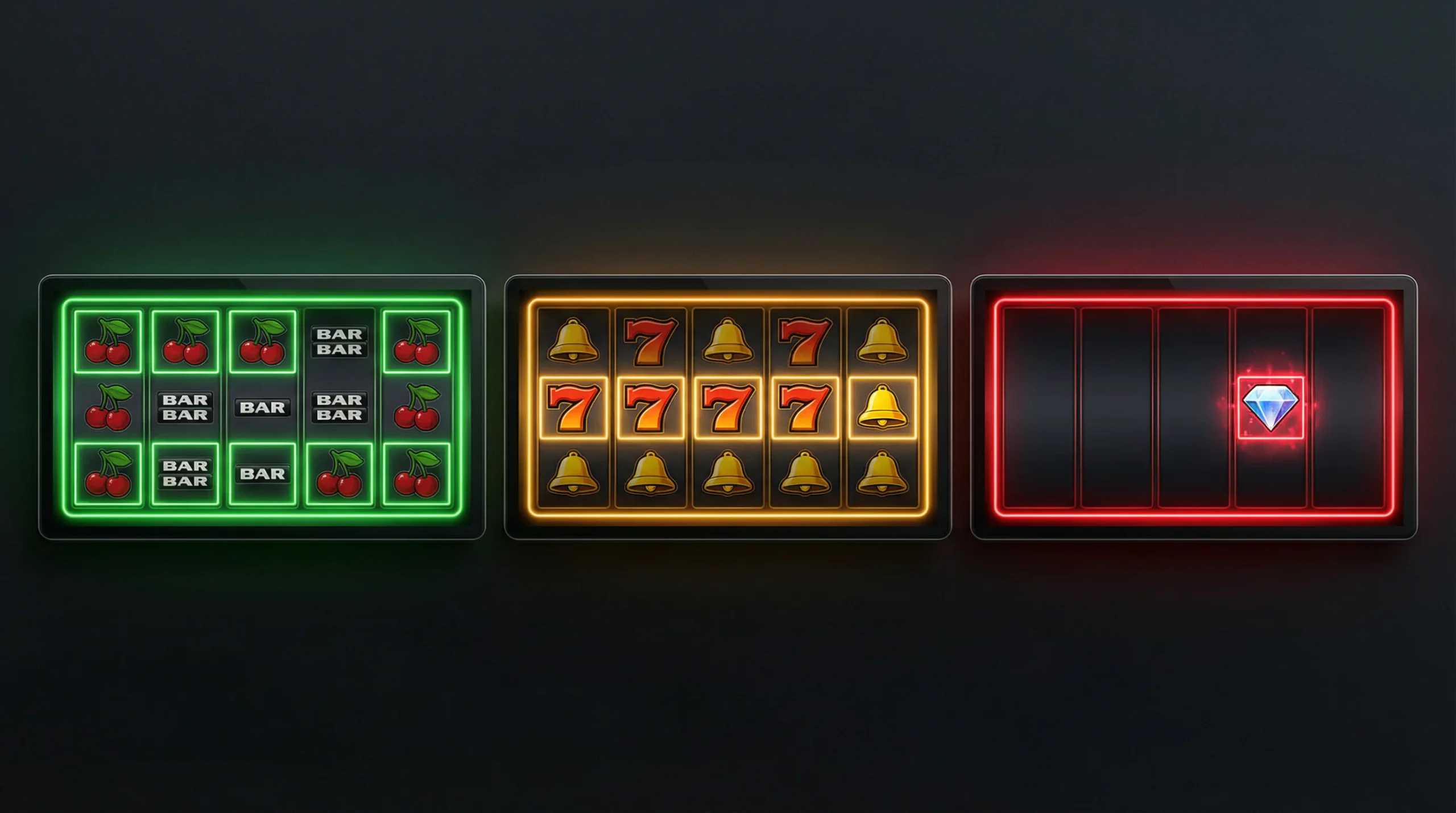
Volatility describes the distribution of outcomes. A low-volatility slot pays out frequently but in small amounts. Your balance fluctuates gently, sessions tend to last longer, and the experience feels steady. A high-volatility slot pays out rarely but with the potential for much larger individual wins. Your balance can drop sharply during dry spells, and the experience is defined by long stretches of loss punctuated by occasional spikes. Medium volatility sits between the two, offering a balance of frequency and size that suits most recreational players.
The difference is not about which is better. It is about which matches your bankroll and your tolerance for losing streaks. If you have a £50 session budget and you play a high-volatility slot at £1 per spin, you might exhaust your balance in 30 to 40 spins without hitting a significant win. The same budget on a low-volatility slot at the same stake will typically last longer, because the game returns small payouts more often. Neither approach changes the house edge; a 96% RTP slot costs you 4% of your total wagered regardless of volatility. What changes is how that cost feels during the session.
Volatility is not always published as a precise number. Some providers label it as low, medium, or high. Others use a scale from 1 to 10 or 1 to 5. A few providers, notably Pragmatic Play and Push Gaming, publish detailed mathematical profiles for their games. Where exact figures are not available, you can infer volatility from the game's paytable: if the maximum win is above 10,000x the stake and the base game payouts are small, the game is almost certainly high volatility. If the maximum win is below 2,000x and the base game returns frequent small wins, it leans low.
Types of Slots Available at UK Casinos
The UK lobby is wider than it looks. Walk into any UKGC-licensed online casino and you will find hundreds, sometimes thousands, of slot titles. But beneath the surface variety of themes and brand names, the games fall into a handful of distinct mechanical formats. Each format plays differently, pays differently, and suits different types of player. Knowing what you are looking at before you start spinning saves both time and money.
Classic Slots
Three reels, one to five paylines, minimal bonus features. Classic slots are the simplest format still available at UK casinos. They offer clean maths, fast rounds, and low complexity. RTP ranges vary widely (92%–97%), and volatility tends toward low or medium. These suit players who want a straightforward experience without cascading features or multi-stage bonus rounds.
Video Slots
Five reels, 10 to 50 paylines, and a full suite of bonus features including free spins, pick-and-click rounds, expanding wilds, and multipliers. Video slots are the dominant format in the UK market by volume. Themes range from ancient mythology to branded entertainment. RTP typically sits between 95% and 97%. Volatility spans the full spectrum depending on the game's design.
Megaways Slots
A mechanic licensed from Big Time Gaming that uses variable reel heights. Each spin changes the number of symbols on each reel, creating anywhere from a few hundred to 117,649 possible ways to win. Megaways games are almost universally high volatility, with maximum wins often exceeding 10,000x the stake. Popular titles include Bonanza Megaways, Gonzo's Quest Megaways, and Big Bass Megaways.
Progressive Jackpot Slots
A portion of every bet placed across a network of linked casinos feeds into a central prize pool that grows until one player triggers it. Progressive jackpots can reach millions of pounds. The trade-off is typically a lower base-game RTP, because part of each wager funds the jackpot. Major progressive networks include Mega Moolah (Microgaming) and Jackpot King (Blueprint Gaming).
Bonus Buy Slots
Feature-purchase mechanics that let you skip the base game and buy direct access to the bonus round, usually for 60x to 100x your stake. Bonus buy is not available at UKGC-licensed casinos — the Gambling Commission banned the feature in 2019 under Remote Technical Standard requirement 14A, which prohibits gambling products from encouraging players to increase their stake. Games that include bonus buy in other jurisdictions are still playable in the UK but with the feature deactivated. The format is included here because UK players may encounter it discussed in reviews or on non-UK sites.
Beyond these five core formats, the UK market also includes cluster-pay slots, where wins form from groups of adjacent matching symbols rather than paylines; hold-and-win games, which use a respins mechanic to fill a grid and award prizes based on the symbols collected; and hybrid formats that combine elements from multiple categories. The format taxonomy is not rigid — new mechanics appear regularly, and game providers constantly iterate. What matters is understanding the core structure of the game you are playing, because the format determines the pacing, the risk profile, and the type of wins you can expect.

UKGC Regulation — What Protects You as a Player
The Gambling Commission doesn't suggest rules — it enforces them. The UK Gambling Commission is the statutory body responsible for licensing and regulating all commercial gambling in Great Britain. If you play real-money slots at a UK-licensed casino, the UKGC is the authority that determines what that casino must do to protect you. This is not an advisory role. The Commission holds the power to fine operators, suspend licences, attach conditions, and revoke the right to operate entirely. Since 2017, the UKGC has imposed hundreds of millions of pounds in cumulative regulatory penalties on operators found in breach of licence conditions, with individual fines reaching eight figures — including the record £17 million penalty against Entain in 2022 and a £19.2 million fine against William Hill in 2023.
For players, UKGC licensing provides several concrete protections. Licensed operators must segregate player funds from operational funds, meaning your balance should be protected if the operator becomes insolvent. Games must use certified RNGs and publish accurate RTP information. Operators must provide access to responsible gambling tools including deposit limits, session timers, and self-exclusion. Advertising must comply with the Committee of Advertising Practice codes, which prohibit targeting under-18s, misleading bonus claims, and appeals to vulnerability. And if a dispute arises, licensed operators are required to offer access to an approved alternative dispute resolution provider.
As of 2026, the UKGC's online slots stake limits are in force: a maximum of £5 per spin for players aged 25 and over (from 9 April 2025), and £2 per spin for players aged 18 to 24 (from 21 May 2025). These limits apply to all UKGC-licensed online slot games and represent the most significant change to slot play conditions since the credit card gambling ban took effect in April 2020.
How to Verify a Casino's UKGC Licence
Every UKGC-licensed operator must display its licence number on its website, typically in the footer alongside the Commission's logo. The licence number is a six-digit figure. To verify it, go to the UKGC's public register at gamblingcommission.gov.uk/public-register and search by operator name or account number. The register shows the operator's licence status, the activities it is licensed to provide, and any regulatory actions taken against it.

Red flags to watch for: no licence number displayed, a licence number that does not appear on the public register, a licence listed as "surrendered" or "revoked," or a casino that claims to be "licensed in the UK" but only holds a licence from a different jurisdiction. Offshore-only licences from Curaçao, Anjouan, or similar jurisdictions do not carry the same enforcement weight or player protections as a UKGC licence. If a casino does not hold a current, active UKGC licence, UK law prohibits it from offering gambling services to consumers in Great Britain.
New Stake Limits and What They Mean for Play
The stake limits introduced under the UKGC's enhanced player protection measures mark a deliberate intervention in how slots are played in the UK. The £5 maximum per spin for players aged 25 and over, and the £2 maximum for those aged 18 to 24, apply across all online slot games at UKGC-licensed operators. These caps were developed following the Gambling Act Review white paper published in April 2023 and were shaped by evidence linking higher stake levels to increased gambling harm, particularly among younger adults.
In practical terms, the limits change the pace at which you can lose money. At a £5 maximum stake with a 2.5-second minimum spin speed — another UKGC-mandated rule — the maximum theoretical loss rate is £120 per minute. Under the previous regime, where stakes of £100 or more per spin were possible on some games, the potential loss rate was orders of magnitude higher. The limits do not change the mathematical edge of any game, but they reduce the speed at which that edge can compound against a player's balance. For high-volatility games where large stakes were part of the appeal, the change significantly alters the risk profile.
Other rules complement the stake limits. The ban on credit card deposits for gambling, in place since April 2020, prevents players from staking money they do not have. The prohibition on autoplay features at UKGC-licensed casinos requires players to actively initiate each spin. The mandatory 2.5-second minimum spin time prevents rapid-fire play that accelerates losses. Taken together, these measures represent a regulatory environment that is materially more restrictive than the one that existed even three years ago.
How to Choose a Slot Worth Your Money
Choosing a slot is a filtering problem, not a feeling. The lobbies at UK casinos can list anywhere from 500 to over 3,000 titles. The default way most players pick a game is by theme, by thumbnail, or by whatever the casino places at the top of the page — which, not coincidentally, is often whatever generates the most revenue for the operator. A more useful approach treats slot selection as a structured decision based on the numbers that actually matter.
Start with RTP. Any slot with a published RTP below 95% is mathematically expensive. A 94% RTP means a 6% house edge, which will cost you £60 for every £1,000 wagered. Filtering for 96% and above narrows the field immediately and reduces your expected cost per session. Next, match the game's volatility to your bankroll. If your session budget is £30, a high-volatility slot at £1 per spin gives you roughly 30 spins — not enough to weather the dry spells these games are built around. Low or medium volatility at the same stake gives you a statistically longer runway.
Third, check whether the game contributes fully to any active bonus wagering requirements. Not all slots count equally toward clearing a bonus. Some contribute 100% of each wager, while others contribute 50%, 25%, or nothing at all. If you are clearing a bonus, playing a game that contributes 50% effectively doubles the wagering requirement. Fourth, check the game's maximum win cap. Some slots limit the total payout per spin or per bonus round to a fixed multiple of the stake, typically somewhere between 2,000x and 25,000x. If the cap is low relative to the volatility, the game's risk-reward profile may not match your expectations.
Finally, test in demo mode before committing real money. Almost every UKGC-licensed casino offers a free-play version of its slots. Demo mode uses the same RNG and the same maths as the real-money version. It will not tell you whether you will win, but it will tell you how the game feels: the pace, the frequency of bonus triggers, and whether the mechanics suit your style. Five minutes in demo mode can save you from a bad fit that costs real money.
Five checks before you choose a slot
- Confirm the actual in-game RTP is 96% or above by checking the game's info screen
- Match the volatility level to your session budget — low volatility for smaller bankrolls, high volatility only with a buffer to absorb losing streaks
- Verify the game's contribution rate to any active bonus wagering requirement
- Review the maximum win cap in the paytable to understand the ceiling on potential payouts
- Play the demo version for at least 50 spins to assess the game's pacing and bonus trigger frequency
Bonuses and Wagering — What the Small Print Costs You
A bonus is only as good as its terms — and the terms have just changed. Casino bonuses are the most misunderstood feature of real-money slot play, though recent UKGC reforms have significantly improved their value. The headline figure — "deposit £100, get £100 free" — is marketing. The terms and conditions, specifically the wagering requirement, are the product. Under the UKGC's January 2026 rules, wagering requirements are now capped at 10x, which means bonuses at licensed UK casinos are materially better value than they were under the previous regime.
A wagering requirement defines how many times you must bet the bonus amount (or the bonus plus deposit) before any winnings derived from the bonus become withdrawable. As of January 2026, the UKGC has capped wagering requirements at a maximum of 10x the bonus amount. Under the previous regime, wagering requirements of 30x to 50x were standard, making most bonuses negative-EV propositions. The new 10x cap significantly reduces clearing costs: a 10x requirement on a £100 bonus means you must place £1,000 in total wagers before you can cash out. During those £1,000 in wagers, you are still paying the house edge on every spin. If you are playing a 96% RTP slot, your expected loss over £1,000 in wagers is £40. You received £100 in bonus money, but clearing it costs you £40 in expected losses — a net positive expected value of £60.
This dynamic changed significantly in January 2026 when the UKGC introduced a maximum wagering requirement cap of 10x. Before this reform, the vast majority of casino bonuses with wagering requirements of 30x or higher were negative-EV propositions when played on slots with typical RTP. Under the 10x cap, most bonuses at UKGC-licensed casinos now carry a positive or near-neutral expected value for the player. The operator still benefits from the additional wagering volume generated, but the mathematical cost to the player has been substantially reduced. Understanding the maths remains important — always calculate the real cost before you decide.
Do
- Read the full bonus terms before accepting, paying attention to wagering multiplier, game contribution rates, and maximum bet limits during wagering
- Calculate the expected cost of clearing the bonus before opting in
- Prioritise no-wagering or low-wagering bonuses where the effective cost is closer to zero
- Check the bonus expiry period — most bonuses must be cleared within 7 to 30 days or they and any associated winnings are voided
Don't
- Assume the bonus amount is money you can withdraw — it is conditional credit until wagering is complete
- Play high-volatility slots to clear wagering unless the terms specifically allow it and your bankroll can absorb extended dry spells
- Exceed the maximum bet limit during active wagering — this is the most common reason operators void bonus winnings
- Chase wagering completion by depositing additional funds to cover losses — set a single budget and stop if it runs out
Free Spins, Matched Deposits, and No-Wagering Deals
Free spins are the most common bonus format at UK slot casinos. They come in two main varieties: no-deposit free spins, awarded when you register an account without requiring a deposit, and deposit-linked free spins, bundled with a deposit match or triggered by a qualifying deposit. No-deposit free spins are typically limited to a specific game, carry wagering requirements of up to 10x (the current UKGC maximum) on any winnings, and cap the maximum withdrawal at £20 to £100. They are a trial mechanic, not a profit opportunity.
Deposit-linked free spins often come as part of a welcome package alongside a matched deposit bonus. The spins themselves may have their own wagering requirement, separate from the match bonus wagering, or the winnings may be added to the bonus balance and cleared under the same terms. The details vary by operator, and the details matter. Two apparently identical "50 free spins" offers can have radically different effective costs depending on the wagering attached.
Matched deposit bonuses add a percentage of your deposit as bonus credit. The most common format is a 100% match: deposit £50, receive £50 in bonus funds. Less common but more valuable are no-wagering bonuses, where any winnings from the bonus or free spins are credited as withdrawable cash immediately. No-wagering deals carry zero clearing cost, which makes them the only bonus type with a genuinely positive expected value for the player. They are rare, and the amounts tend to be smaller, but they are the cleanest offer on the market.
How to Calculate the True Cost of Clearing a Bonus
The calculation is simple once you know the inputs. Take the wagering requirement, multiply it by the bonus amount, and then multiply the total wagering by the house edge of the slot you plan to play. The result is your expected cost of clearing the bonus.
Worked example: a casino offers a £100 bonus with 10x wagering (the current UKGC maximum). You play a slot with a 96% RTP, meaning a 4% house edge. Total wagering required: 10 x £100 = £1,000. Expected loss during wagering: £1,000 x 0.04 = £40. You received £100 in bonus funds and will lose an expected £40 clearing them. Net expected value: +£60. Under the previous regime where 35x was common, the same bonus required £3,500 in wagers with an expected loss of £140, producing a net expected value of -£40.
Now consider the same bonus cleared on a slot with 50% game contribution. The effective wagering requirement doubles to 20x, meaning £2,000 in total wagers. Expected loss: £2,000 x 0.04 = £80. The bonus is still net-positive at +£20, but the value has been significantly reduced. Game contribution rates are the hidden variable that many players overlook, and they can halve the real value of clearing a bonus.
The breakeven point — where the bonus expected value is zero — occurs when the wagering requirement multiplied by the house edge equals 100%. For a 4% house edge, that is a 25x wagering requirement. With the UKGC's current 10x cap, all bonuses at licensed UK casinos fall well below this breakeven point, making them positive-EV for the player in mathematical terms. This represents a major shift from the pre-2026 landscape where most bonuses sat between 30x and 50x and were net-negative. Game contribution rates remain an important variable — if a game contributes only 50% toward wagering, the effective requirement doubles, so always check the terms.
Responsible Play — Tools That Work If You Use Them
Responsible gambling tools exist at every UK casino — the question is whether you'll activate them before you need them. Every UKGC-licensed operator is required by licence condition to offer a suite of tools designed to help players manage their gambling activity. These are not optional extras or premium features. They are mandatory, they are free, and they are available in every account settings menu. The problem is not availability — it is activation. Most players never touch them until a session has already gone wrong.
Deposit limits are the most effective tool available. You can set daily, weekly, and monthly caps on how much you are allowed to deposit. Once the limit is reached, the casino blocks further deposits until the period resets. Decreases to deposit limits take effect immediately. Increases require a cooling-off period, typically 24 to 72 hours, which prevents impulsive raising of limits during a losing session. If you do nothing else before your first spin, set a deposit limit. Set it lower than what you think you can afford, and leave it there for at least a month before reconsidering.
Session time limits and reality checks serve a different function. Session time limits log you out of the casino after a set duration. Reality checks are periodic pop-up notifications — usually every 15, 30, or 60 minutes — that display how long you have been playing and your net position (deposited vs withdrawn). These interruptions break the flow state that extended slot play can induce, forcing a moment of conscious assessment. They are easy to dismiss, but the act of seeing the numbers is often enough to prompt a rational decision.
Cooling-off periods allow you to temporarily block your account for 24 hours, 48 hours, a week, or a month. During a cooling-off period, you cannot log in, deposit, or play. This is a lighter measure than full self-exclusion and is useful when you recognise that a session or a week has not gone well and you need a deliberate pause. Full self-exclusion is available through the GamStop scheme, which blocks you from all UKGC-licensed gambling sites for a minimum of six months, one year, or five years. GamStop registration is free and can be done at gamstop.co.uk.
If you are concerned about your gambling or someone else's, the National Gambling Helpline operated by GamCare is available on 0808 8020 133, 24 hours a day, 7 days a week. BeGambleAware provides information, advice, and support resources at begambleaware.org.
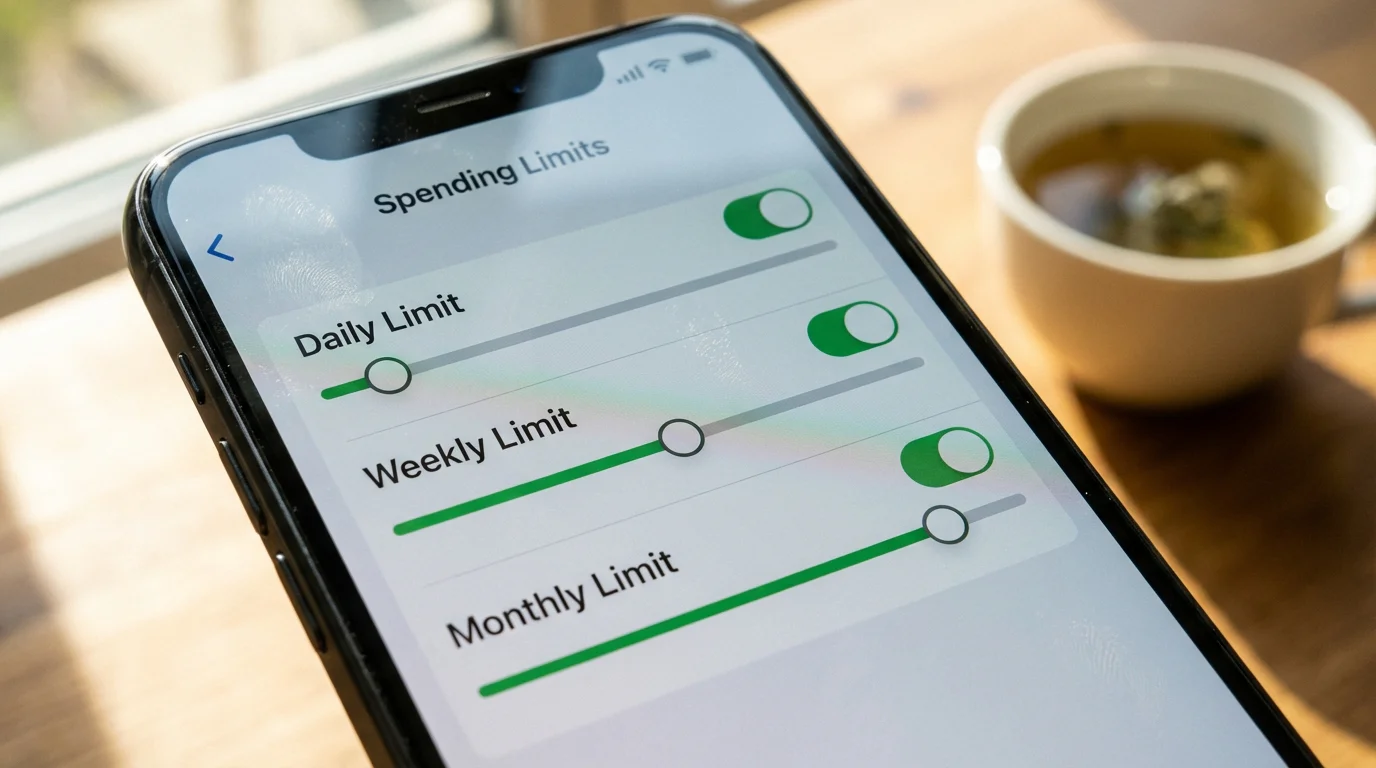
Every responsible gambling tool at UK casinos is opt-in. They work, but only if you activate them before the session starts — not after the damage is done.
Common Questions About Real-Money Slots in the UK
What does RTP mean and does a higher RTP guarantee bigger wins?
RTP stands for Return to Player and is expressed as a percentage. A slot with a 96% RTP returns, on average, £96 for every £100 wagered — but this average is calculated over millions of spins, not over your individual session. A higher RTP means a lower house edge and a lower mathematical cost of playing over time. It does not guarantee bigger wins or any wins at all in a given session. Short-term results are governed by variance, and it is entirely possible to have a losing session on a high-RTP game or a winning session on a low-RTP game. RTP is a measure of long-run cost, not a predictor of short-run outcomes.
Are online slots rigged, or is the game genuinely fair at UK-licensed casinos?
At UKGC-licensed casinos, online slots are not rigged. Every game must use a certified random number generator that is independently tested by accredited laboratories such as eCOGRA, GLI, or BMM Testlabs. These tests verify that outcomes are statistically random, that each spin is independent of previous results, and that the game's actual return matches its published RTP. The UKGC requires ongoing compliance monitoring and has the authority to fine or shut down operators who breach these requirements. This does not mean you will win — the house edge ensures the operator profits over time — but it does mean the game operates within its declared mathematical model.
What are wagering requirements and how do they affect my real-money winnings?
A wagering requirement is the number of times you must bet a bonus amount before you can withdraw any winnings derived from it. Since January 2026, the UKGC has capped wagering requirements at a maximum of 10x. A 10x requirement on a £50 bonus means you must place £500 in total wagers before the money becomes withdrawable. During those wagers, you are paying the house edge on every spin, which means clearing a bonus still involves expected losses — but at 10x on a 96% RTP slot, the expected cost is £20, making the £50 bonus net-positive at +£30. Always calculate the real cost before accepting a bonus, and look for no-wagering offers where winnings are paid as cash immediately.
The House Always Has the Edge — Your Job Is to Know How Wide
No guide makes slots profitable. What it does is make the cost transparent. Every real-money slot at every UKGC-licensed casino carries a mathematical advantage for the operator. That advantage is small on a per-spin basis — typically 3% to 6% of the amount wagered — but it is constant, it is cumulative, and over enough play, it is certain. The house edge is not a defect in the system. It is the system. It is how operators fund their platforms, pay their licence fees, and stay in business. You cannot eliminate it, and anyone who tells you otherwise is selling something.
What you can do is understand the size of the edge, choose games where it is smaller rather than larger, match your play to a budget you have consciously set, and use the tools available to manage your exposure. RTP tells you the cost. Volatility tells you the ride. Wagering requirements tell you the price of a bonus. Licence verification tells you whether the game is even legitimate. None of these things guarantee a winning session. All of them reduce the chance of an unpleasant surprise.
Treat your session budget as the cost of entertainment, not as an investment expecting a return. A two-hour slot session with a £40 budget that ends at zero is not a failure — it is a £40 evening of entertainment, no different in economic terms from a cinema trip, a concert, or a meal out. The difference is that slots carry the illusion of potential profit, and that illusion can distort how you evaluate the experience. Strip the illusion away, and what remains is a mathematical game with a known cost and an uncertain outcome. Play informed, play within limits, and recognise that the edge is always there.