
KYC Verification at UK Casinos
 Available in GB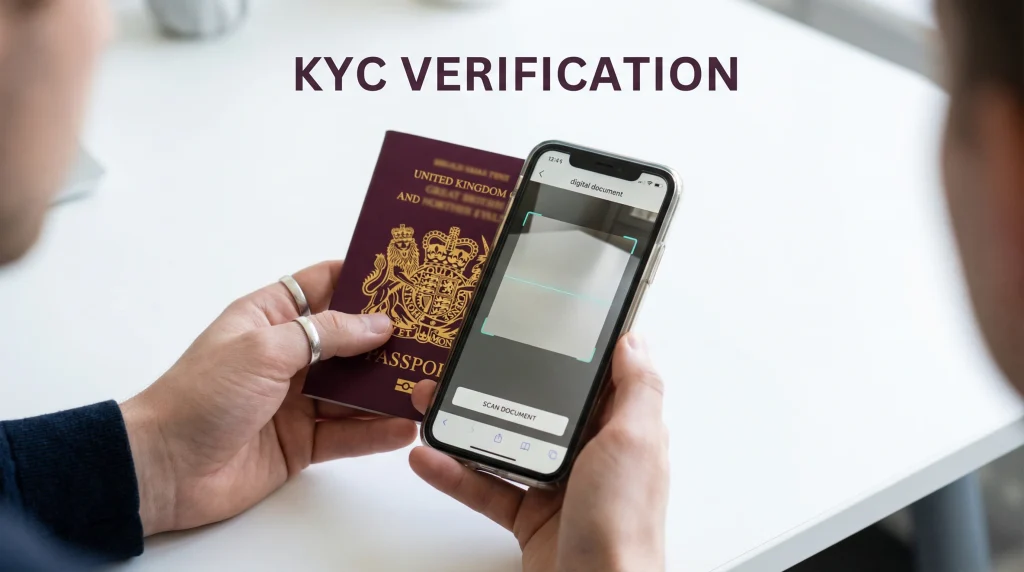
Why the Casino Needs Your ID
Know Your Customer checks are a legal requirement, not an inconvenience. Every UKGC-licensed casino must verify the identity, age, and address of its customers. This obligation exists under both gambling regulation and anti-money laundering legislation, and it applies universally — regardless of how much you deposit, which games you play, or how long you have been a customer.
The purpose is threefold. Age verification ensures that no one under 18 can gamble at the site. Identity verification confirms that you are who you claim to be, preventing fraud and identity theft. Address verification establishes your residency, which determines regulatory jurisdiction and helps operators comply with their licence conditions.
For players, KYC is the administrative price of playing at a regulated casino. It takes minutes to complete, it only needs to be done once per operator, and it unlocks the full functionality of your account — including, crucially, the ability to withdraw your winnings. Treating it as a task to complete early rather than an obstacle to deal with later will save you frustration at the exact moment you least want it: when you have money waiting to be paid out.
What Documents You Need and How to Submit Them
Passport or driving licence plus a utility bill — submitted before your first withdrawal. The standard KYC process at a UK casino requires two categories of documentation: proof of identity and proof of address. Some operators accept a single document that covers both, but most require one from each category.
Proof of identity confirms your full name, date of birth, and photograph. Accepted documents typically include a valid UK passport, a UK driving licence (full or provisional), or a national identity card issued by an EEA country. The document must be current — expired passports and licences are usually rejected. You will be asked to upload a clear photograph or scan of the document, showing all four corners, with no glare or obstruction over the text or photo.
Proof of address confirms your current residential address and must be dated within the last three months. Accepted documents include a utility bill (gas, electricity, water, landline phone), a bank or building society statement, a council tax bill, or a government-issued letter (HMRC correspondence, for example). Mobile phone bills are sometimes accepted but not universally — check the operator’s specific requirements. The name and address on the document must match the details on your casino account.
Submission is handled digitally at virtually every UK casino. You upload photographs or scans through your account settings, a dedicated verification page, or occasionally via email to the operator’s support team. Image quality matters: blurry photographs, cropped edges, and low-resolution scans are the most common reasons for document rejection and subsequent delays. Use a well-lit surface, photograph the entire document flat against a contrasting background, and check the image for legibility before submitting.
Processing times vary by operator. Some casinos use automated verification systems that can confirm your identity within minutes by cross-referencing your documents against electoral roll data, credit reference agencies, and government databases. Others rely on manual review by a verification team, which can take 24 to 72 hours during busy periods. A few operators offer instant verification through partnerships with digital identity providers — you scan your passport with your phone camera and receive confirmation in real time.
If your documents are rejected, the casino will notify you with a reason. Common rejection reasons include: the document is expired, the image is illegible, the name does not match your account details, or the address proof is older than three months. Correct the issue and resubmit. Repeated rejections may trigger a request to contact customer support directly, but the process is not adversarial — the operator wants to verify you, not obstruct you.
When to Complete KYC — Before or After You Play
Complete verification early to avoid delays when you want to withdraw. The UKGC requires casinos to verify a customer’s age before allowing them to gamble. In practice, most operators use a two-stage approach: an initial soft check at registration (often automated, using electoral roll or credit reference data) that allows you to deposit and play immediately, followed by a full document check that must be completed before your first withdrawal.
This means you can usually start playing before your documents are verified, but you cannot withdraw until verification is complete. The timing creates a trap that catches many players: they deposit, play, win, request a withdrawal, and then discover they need to submit documents and wait for approval before seeing their money. The excitement of a win turns into the frustration of a delay that could have been avoided entirely.
The solution is simple. Submit your documents immediately after registering, before you deposit or play. Most casinos allow you to upload verification documents at any time through your account settings. Completing the process upfront means your account is fully verified when you need it — and the first withdrawal experience is limited only by the operator’s processing time, not by a verification queue.
Some operators have moved to a “verify first, play second” model, requiring full document verification before any deposit is accepted. This approach eliminates the withdrawal delay entirely but adds friction at the registration stage. It is becoming more common as the UKGC pushes for stricter upfront verification, and it is arguably the better model for players — even if it feels like an obstacle when you first encounter it.
Enhanced Checks and Source-of-Wealth Requests
Higher withdrawals may trigger additional documentation requests. Beyond standard KYC, UKGC-licensed casinos are required to conduct enhanced due diligence when certain thresholds are reached or when a customer’s activity raises risk indicators. These enhanced checks typically involve a source-of-wealth or source-of-funds request — a requirement to demonstrate where your gambling money comes from.
Source-of-wealth checks ask you to provide evidence of your overall financial position: payslips, bank statements, tax returns, property ownership documents, or proof of inheritance, investments, or business income. The operator is assessing whether your gambling activity is consistent with your financial means. If you deposit £2,000 per month and your salary is £3,000, the casino may reasonably want to understand whether that level of gambling is sustainable.
Source-of-funds checks are narrower. They focus on the specific funds used for a deposit or series of deposits. If you make a large single deposit — the threshold varies by operator but is often in the range of £2,000 to £5,000 — the casino may ask you to show where that specific money came from. A bank statement showing the transfer, a payslip dated around the same time, or documentation of a recent sale or withdrawal from savings may be requested.
These checks are not harassment. They are a legal obligation under anti-money laundering regulations, and the UKGC has fined operators millions of pounds for failing to conduct them adequately. The operators that perform them well are doing what the regulator requires. The operators that skip them are the ones accumulating enforcement actions.
If you receive a source-of-wealth request, respond promptly and provide clear documentation. Delays in responding will result in account restrictions — deposits blocked, withdrawals held, or play suspended until the check is resolved. The process can feel intrusive, particularly when all you want is to access your own money, but it is a standard part of operating within a regulated framework. The faster you comply, the faster the restriction lifts.
One practical note: if you are a high-volume player or you anticipate making large deposits, proactively uploading source-of-wealth documentation before it is requested can preempt delays. Some casinos offer a dedicated section in account settings for supplementary documents. Using it early establishes your financial profile on file and reduces the likelihood of a surprise request at an inconvenient moment.
Verify Once, Withdraw Without Friction
Frontload the paperwork and the rest of your experience gets smoother. KYC verification is a one-time process at each casino. Once your identity and address are confirmed, subsequent withdrawals are subject only to the operator’s standard processing time — not an additional verification delay. Enhanced checks may occur separately, but the baseline KYC is done.
The players who have the smoothest experience with UK casinos are the ones who treat verification as a registration step, not a withdrawal obstacle. Upload your documents within minutes of creating your account. Confirm they have been accepted. Then play, win or lose, and withdraw knowing that the administrative side is already handled. The five minutes you invest upfront pays for itself the first time you request a cashout and see it processed without a hold.