
Classic Slots Online UK: How Reels and RNGs Work
 Available in GB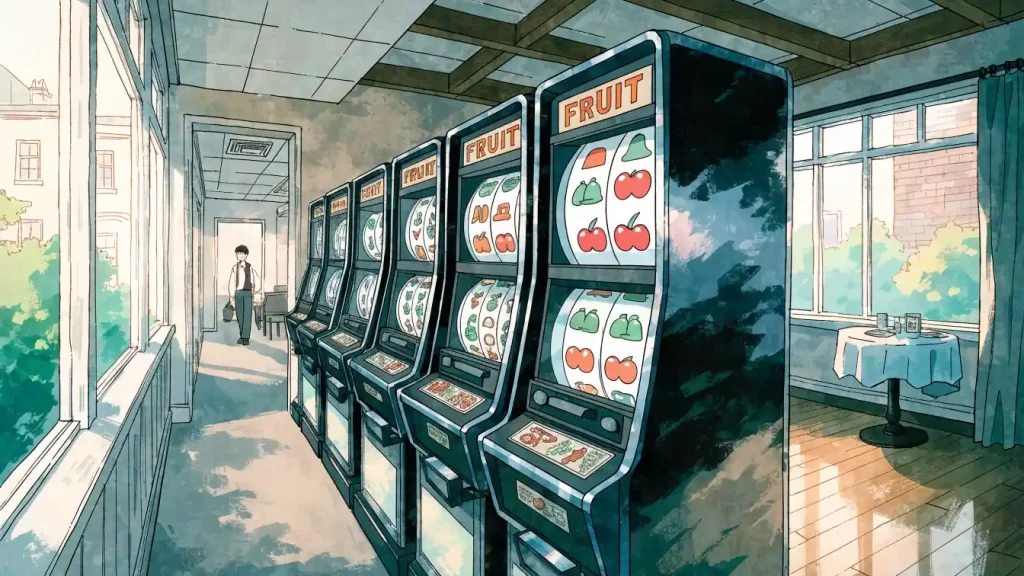
A familiar three-reel layout can conceal digital mechanics, independent RNG outcomes and feature rules that shape each spin.
The Old Shape of a Slot, and the Chance Behind It
The classic slot has a shape that needs little explanation: reels, symbols and a result that appears when the motion stops. Fruit, bells and other familiar images belong to a visual language built for quick recognition. A three-reel classic slot is its most economical expression, though the label “classic” can cover games that do not follow precisely the same design. The look is familiar; the chance behind it is less visible.
That contrast helps explain the enduring appeal of classic slots online. Their surfaces borrow the plain grammar of the old machine: a small arrangement of symbols, a brief pause, then a result to read. There is little need for a story to establish what is happening. Yet a familiar appearance does not tell anyone how the outcome is produced. A digital reel may resemble a mechanical one without sharing its workings.
Some slots use a random generator to determine their results. On licensed sites, Random Number Generators, generally shortened to RNGs, are used so that each spin stands on its own and cannot be predicted in advance. A new result is not a continuation of the previous one. The symbols may look as if they are moving through a sequence, but the next outcome is not waiting somewhere in the visible motion to be discovered.
This independence is easy to doubt, because people are good at finding patterns, especially when money and repetition are involved. A run of losing spins can feel as though it must be followed by a win; a recent win can seem to have opened a favourable stretch. Neither impression changes the next result on a regulated online game. The generator does not keep a ledger of what a player has just experienced and adjust the next spin to balance it.
The same holds for the moment a spin is started. Waiting for a particular time, choosing a brisk rhythm or pausing after a result has no effect on the random outcome. Nor does changing the size of a bet make that outcome more or less likely. These habits can feel like decisions with a hidden influence, but timing and stake do not steer the generator.
Progressive Slots Online in the UK: How Jackpots Work
This is not a claim that every game looks or behaves identically. It is a distinction between the display and the process: a classic slot may present its result through reels and symbols, while the chance that selects the result is governed by the game’s random system. The old visual form invites the eye to read a line of symbols as though it were a physical mechanism. Online, resemblance is not evidence of a mechanical sequence.
There is a human reason the old form remains legible. Reels make chance visible in a compact scene. Symbols arrive, settle and can be compared without a long explanation. A player does not need to understand the machinery to recognise a result. That simplicity is part of the design’s inheritance, not proof that the symbols are moving toward a particular outcome.
The mind supplies a plot anyway. After several losses, the next spin may feel “due”; after a win, it may seem sensible to keep the moment going. Such stories are understandable responses to repeated events, but they do not describe how independent outcomes work. Each new spin begins without a memory of the sequence that came before it. No debt is owed by chance.
For online classic slots in the UK, the central point is therefore less romantic than the reels suggest. The familiar format offers a clear picture of an event, not a clue to its future. On licensed sites using RNGs, earlier results, the time of play and the chosen bet size cannot predict or influence what comes next. The display may invite interpretation. The outcome remains unpredictable.
The Three-Reel Machine in a Free Demo
The three-reel image has become a shorthand for the classic slot: a compact cabinet, a row of symbols, and a result visible at a glance. Online, that shape survives without the cabinet. Reels sit inside a screen, surrounded by buttons, labels and small panels whose arrangement can matter as much as the symbols themselves. A demo gives those parts room to become familiar before money enters the picture.
A free demo allows you to learn the game’s layout, symbols, and instructions without wagering real money.
That is its practical value. A free version can show where a game places its spin control, how its symbols are presented and where its instructions or feature descriptions sit. It allows the basic grammar of a particular title to be read at leisure, rather than while a real-money session is already under way. The classic slot machine may look plain; its screen still has a layout to learn.
The word “classic” can suggest one fixed design, but online games do not all arrange themselves alike. Some use the recognisable three-reel frame; others borrow its restrained style while presenting a different screen or set of controls. A classic 3-reel slot machine is therefore best understood as a familiar format, not a guarantee that every game will behave or look the same. The demo belongs to the individual title.
A useful first look is often less dramatic than the game’s artwork suggests. The reel area establishes what the player is watching, while the surrounding interface identifies the available controls and information. A demo lets these elements be inspected without a wager. There is no need to treat the screen as a puzzle with a prize hidden behind it; the immediate task is simply to understand what is where.
Instructions matter for the same reason. They explain the game’s own arrangement and describe its features in the terms used by that title. Reading them in a demo can prevent an avoidable misunderstanding later: a symbol or button that looks self-explanatory may have a specific role, and visual familiarity is not the same as knowing the rules. The manual has moved inside the machine. Less paper, more small print.
Online Craps in the UK: Casino Roles and Limits
This is where free classic slot games can be useful to someone comparing the feel of older-style designs with newer presentations. The demo does not have to become a test of skill or a rehearsal for a winning session. It can be a short tour: locate the controls, identify the information panel, see how the reels are framed, and note which features the game itself describes. That modest purpose is enough.
Free online classic slot games also remove the immediate pressure of deciding how much to stake while learning where the controls are. That separation can make the interface easier to assess. A person can take in the screen before deciding whether the game suits their preferences; the demo does not require that a real-money session follow. Familiarity is not an obligation.
The difference between a game’s appearance and its arrangement deserves attention. A title may evoke an old fruit-machine cabinet through its symbols, colours or sound, yet still place its controls in a distinctly modern interface. Conversely, a restrained design may use familiar conventions without reproducing a physical machine. A demo reveals the practical version of the nostalgia: not the remembered cabinet itself, but the way this particular game has translated it onto a screen.
For those searching for free classic slot machines, the phrase can describe several different experiences. Some demos may present a close three-reel layout; others may simply carry a classic visual style. Looking at the game itself is more informative than relying on its label. The title and its instructions show what is actually on screen, while the demo lets the layout be explored before wagering.
DO
- Use a free demo to learn the interface and controls.
- Read the game’s instructions to understand specific rules.
DON’T
- Treat a demo as a guarantee of future real-money results.
- Rely on a visual style to predict game mechanics.
The phrase “play classic slot machines online free” sounds like an invitation to sit down at a virtual cabinet. In practice, the experience is mediated by a browser or app, and the game’s interface does the work once performed by physical buttons and printed panels. The demo offers a way to see how that translation has been handled. It is a small encounter with a design tradition, but also with the habits of contemporary software: controls grouped together, information tucked into menus, familiar symbols made legible on a screen.
A demo is not a promise about what a later session will be like in every respect. Its narrower use is more reliable: it lets a player learn the game’s layout and features before wagering. Deposit or time limits are also recommended as part of setting boundaries around play. Those measures address different things, but share a practical instinct: make decisions deliberately, rather than leaving them to the momentum of a session.
The old machine’s visible simplicity remains part of its appeal. Online, however, simplicity is a design impression, not a substitute for understanding the controls. A free demo makes that distinction visible. Familiar shape; particular rules.
Choosing a Classic Slot Without a Borrowed Ranking
A ranking makes a tidy promise: that one title can be placed above another, and that the order will mean much the same to everyone. Classic slots resist that neatness. Their appeal often lies in recognisable shapes and simple visual language, but familiarity is not a common measuring stick. A fruit motif may feel warmly old-fashioned to one player and merely decorative to another; a spare screen may seem clear or dull, depending on what the player wants from a session.
Elk Studios Casinos in the UK: What Can Be Verified
Comparison is still possible. It just works better as a set of questions than as a podium. What does the screen show at a glance? Is the game’s visual style appealing over repeated play? Does its presentation feel calm, busy, playful or theatrical? These are not measures of quality in themselves. They describe the experience, which is more useful than pretending that preference can be settled by a universal order.
The word “classic” can also carry more than one meaning. It may suggest the compact, familiar look of an older fruit-machine format, or it may be used loosely for an online title whose design feels accessible and enduring. Those meanings overlap, but they are not identical. A recognisable online game is not automatically a classic slot in the narrow sense, and an old-fashioned appearance does not by itself make a game a better choice.
Starburst, Gonzo’s Quest and Book of Dead are recognisable online titles, but their names alone do not establish a ranking or prove that they belong to one fixed category. They can be reference points when considering how different games present themselves: one title may be remembered for its visual identity, another for a more adventurous setting. Such impressions describe a player’s response, not an objective result. A list without a stated basis is decoration arranged in order.
A more grounded comparison begins with the screen itself. Some players prefer a compact display that makes the main symbols easy to pick out; others favour a more elaborate setting with a stronger sense of atmosphere. Sound and animation matter in a similar way. They can give a game character, but they can also make a session feel crowded. The question is not whether more effects mean more value. It is whether the presentation suits the kind of experience being sought.
Choosing a Slot
Comparison is best done through personal preference and usability rather than universal rankings.
Practical clarity matters as well. A game should make its basic information legible rather than burying it beneath visual flourish. The displayed stake options, the way the game explains its play, and the ease of reading the screen on the device in use can all be compared without turning them into claims about likely returns. This is an assessment of usability, not a prediction of what a session will produce.
The setting around the game changes the comparison too. Online play gives access to a wider selection of titles, at different stakes and at convenient times. That breadth can make browsing feel less like choosing from a single cabinet and more like moving through a large catalogue. Yet abundance does not settle the question of quality. It can even make a ranking less useful: the more varied the tastes and styles, the harder it is to pretend that one short list speaks for everyone.
The casino interface deserves separate attention from the game. A well-presented title can be difficult to browse if it is poorly labelled or awkward to reach; a plain catalogue can still make comparisons straightforward. The site and the slot are not the same thing. A favourable impression of one should not be allowed to stand in for an assessment of the other, just as a polished lobby cannot make every title within it equally suited to every player.
For anyone comparing classic slots for real money, the phrase “best” is therefore better treated as shorthand for a personal fit. A useful choice might be the one whose look is appealing, whose information is clear and whose presentation remains comfortable over time. Another player may reach the opposite conclusion for sound reasons. Rankings tend to hide this difference by converting taste into an apparent fact.
Betsoft Online Casinos UK: Licensing and Evidence
There is no need to turn that uncertainty into a grand mystery. A comparison can be precise about what it actually observes: appearance, readability, atmosphere and ease of navigation. It should stop before claiming that those qualities prove a game is universally superior. In a market full of borrowed lists, that restraint is a small form of honesty. The order is personal.
Fruit-Machine Features, from Holds to Mini-Games
A classic slot can look familiar before it behaves familiarly. Fruit symbols, bright bars and simple reels call up the visual language of the fruit machine, but online games attach different rules to that shared costume. One title may offer holds or nudges; another may centre on free spins or a pick-style mini-game. The details belong to the individual game, not to the general idea of a classic fruit machine.
That distinction matters because a feature name is only a signpost. It does not explain when the feature appears, what choices it permits or how it affects a spin. Two games can use the same label and give it different roles. The screen may look like a small, orderly machine, while its rules are anything but universal.
Holds and nudges are title-specific
Holds and nudges are among the features most closely associated with fruit-machine play. Their names suggest a particular kind of intervention in the reel sequence, but the conditions attached to them vary by title. Some online fruit machine games may make multiple holds or nudges available on a single spin; others may offer them only in particular circumstances. A player cannot infer the rules of one game from another’s appearance.
Feature Variability
Feature names like ‘holds’ or ‘nudges’ are not universal; their specific rules and triggers vary by title.
The practical difference is easy to overlook. A row of buttons or a prompt may make a feature look like a standing option, when it is actually conditional. The game’s own instructions are therefore part of its design, not decorative small print. They describe whether a feature is available, what triggers it and what happens when it is used. Without that information, “holds and nudges” is a category, not a promise.
This is one way online versions have altered the old fruit-machine idiom. A physical machine made its controls visible on a cabinet, and the player encountered its rules through buttons, lights and play. An online game places those rules in a software interface. The cabinet has become a screen, but the need to understand the mechanism has not disappeared. It has simply moved into menus and help panels.
Wilds, free spins and pick-style games
Wild symbols are another possible feature. In a game that includes them, a wild can serve a special role in forming winning combinations, according to that title’s rules. It should not be assumed that every classic slot uses wilds, or that the symbol behaves the same way across games. Its appearance is a game mechanic, not a defining requirement of the classic format.
Free spins may also appear. The phrase describes a feature within a game, rather than a separate kind of machine, and the conditions for receiving or using them depend on the title. The screen may move from the ordinary reels into a distinct feature round, but the visual change does not make the game’s underlying rules interchangeable with another slot’s. A familiar fruit motif can frame a surprisingly individual set of instructions.
Amatic Online Casinos UK: Games, Terms and Licensing
Pick-style mini-games add another variation. These invite a selection from displayed objects or options, with the consequences set by the game. Their appeal lies partly in the change of rhythm: the reel sequence gives way to a moment of choice. Yet the choice is still bounded by the game’s design. A selection on screen is not evidence that a player can determine the eventual return; it is simply how that feature is played.
Taken together, wilds, free spins and pick-style games show why “classic” describes a look or lineage more readily than a fixed inventory of mechanics. Some classic casino slot games retain a plain, reel-centred structure. Others layer additional features over it. Neither arrangement is more authentically classic by definition. The category is broad enough to accommodate both the spare machine and the busier one.
A familiar face, a changing interface
Online versions can also offer quick-spin options and compatibility with mobile devices. Quick spin changes the pace at which the interface presents play, while a responsive web version can adapt the display to a smaller screen. These are interface characteristics, rather than features that tell much about the slot’s theme or its special rounds. A game may be easy to view on a phone and still have rules that require careful reading.
Autoplay is a different matter. Although the feature may appear in descriptions of online fruit machine games in other settings, online slot autoplay is banned in Britain. It should not be treated as a normal option for British online play. The distinction is a reminder that a game’s software and its available controls are shaped not only by designers, but by the rules of the market in which it is offered.
Attention Autoplay is banned in Britain and is not a standard option for UK online play.
Quick spin, by contrast, does not remove the need to understand what is on the screen. A faster presentation can make play feel more immediate, but it does not explain whether a title has a feature round, how a wild works, or when a hold becomes available. Interface speed and game rules are separate things. The distinction is modest, but useful.
The same caution applies to the phrase “classic fruit slot”. Fruit imagery may establish a visual family resemblance, but it cannot settle the mechanics. A fruit-themed game might offer a selection feature or free spins; another might keep attention on the reels. There is no single checklist that every classic fruit slot must satisfy. The style is recognisable. The rulebook is local.
That variety reflects a wider change in how familiar amusements are packaged. The old machine presented its controls in a physical setting, where the layout itself helped explain what could be done. An online game can compress more information into a smaller space, then tuck the full account behind an information icon. The player meets a cleaner surface and, sometimes, a longer set of instructions. Progress, of a sort.
A useful way to approach these games is to treat every feature as belonging to its own title. The same symbol or label can serve a different purpose elsewhere; the same-looking reels may conceal different conditions. The game’s information panel, rather than its fruit-machine appearance, is where the mechanics become specific.
UK gambling casino sites and slots: licensing
Classic slot games, then, are not defined by whether they include every familiar feature. Holds and nudges may be available more than once on a spin or only in particular conditions; wilds, free spins and pick-style mini-games may appear in some titles and not others. The common thread is less a standard set of extras than a family resemblance: compact reels, recognisable imagery and rules that still need to be read.
Active Lines and the Shape of a Spin
A spin has two parts: its arrangement before the reels move, and the pattern left behind when they stop. In some classic slots, the arrangement includes a choice about how many paylines are active. The choice is made manually, so the same game can be set up differently from one spin to the next. Other titles do not offer that adjustment. “Classic slot” describes a family resemblance, not a promise that every machine has the same controls.
A payline is the route along which symbols are assessed. It may run across a row or follow another displayed path through the reels; the exact layout belongs to the individual game. When a spin ends, the game evaluates the symbols on its active lines. Winnings depend on which symbols have been lined up, not simply on whether the screen looks busy or several matching icons happen to appear somewhere.
That distinction is easy to miss when attention is drawn to the pictures. Cherry, bell, bar and seven symbols carry the visual shorthand of the classic slot machine, but a screen full of familiar icons is not itself a result. Their positions matter. A match outside an active line may not count as a winning combination, while a sequence on a line is assessed according to that title’s rules. The symbols supply the vocabulary; the line supplies the syntax.
A slot’s outcome depends on the symbols landing on active paylines, not just the presence of matching icons.
The manual setting changes what is being evaluated, rather than changing the meaning of the pictures. With more lines active, more routes across the reels are included in the assessment. With fewer, fewer routes are considered. This is why the controls deserve a glance before a spin: the displayed line pattern is part of the game’s working arrangement, not decorative detail. A slot may show its active paths clearly, while another may present them through a control panel or a rules screen.
There is a small piece of industrial history in this emphasis on lines. A physical fruit machine made its result legible through symbols gathered in a window; online, the same basic idea is translated into a screen that can mark several possible paths at once. The old visual language remains, but the machine can now make its underlying geometry explicit. Tradition, with a diagram.
For anyone deciding to play a classic slot online, the useful question is not whether a game has the most familiar-looking symbols. It is whether its line arrangement is understandable and whether the controls match the way the game is meant to be played. A title with adjustable active lines invites a setting choice; a title without that option has already fixed the arrangement. Neither description says anything by itself about how often a winning combination appears.
The rules for reading a result are specific to the game. A symbol that matters on one line may not create a win in another position, and two screens with similar fruit or number icons can assess their patterns differently. The game’s own instructions are therefore more useful than assumptions carried over from another machine. A classic appearance may suggest continuity, but it does not standardise every line or combination.
Amatic Games at UK Online Casinos: How They Work
This is also why “more symbols” and “more active lines” should not be confused. Symbols are the pieces shown on the reels; lines are the paths used to assess their alignment. The first concerns what appears, the second where it appears in relation to the game’s layout. Once that difference is clear, the spin becomes less mysterious without becoming predictable: a configuration, a result, and a set of rules joining the two.
Real-Money Slots and the British Stake Ceiling
For real-money classic slots in Great Britain, the stake ceiling is £5 per game cycle for customers aged 25 and over. The limit concerns online slots, not every game found in a casino. A slot spin and a hand of blackjack may share a screen or an account balance; they do not therefore share the same stake rule.
The phrase “per game cycle” matters. It places the cap on the amount staked in a cycle of slot play, rather than setting a general ceiling on what a person may hold in an account or spend across every casino game. The distinction is easy to lose in promotional language, where a casino is presented as one seamless space. Regulation is less interested in the décor than in what is being played.
A classic design does not create an exception. Reels dressed in fruit, familiar symbols and a pared-back layout remain online slots when played for money. The rule follows the game category, not its age or appearance. Nostalgia can alter the look of a machine; it does not alter the legal classification.
Stake Limit
The stake ceiling for real-money play is £5 per game cycle for customers aged 25 and over.
That boundary also keeps the rule from being overstated. The £5 ceiling applies to online slot play in Great Britain for the stated age group. It should not be read as a universal casino stake limit, nor as a description of every way a casino account can be used. Different games sit under different rules.
The limit is part of the conditions around real-money play, not a recommendation about what to stake. A permitted maximum is not a target. In the British system, the state sets a boundary on the cycle while leaving the character of the game—its reels, symbols and presentation—to the people who design it. The distinction is plain enough. The consequences are not abstract: a stake is money put at risk, even when the machine looks like an old amusement arcade.
The UK Licence Behind an Online Casino
A classic slot may look like a small, self-contained machine, but an online casino sits inside a much larger system of public oversight. In the United Kingdom, the Gambling Commission regulates gambling activity, including online casinos. For commercial gambling in Great Britain, it is the sole regulator.
Its reach does not stop at a server room or company headquarters. Remote gambling offered to consumers in Great Britain falls under the Commission’s remit regardless of where the equipment that runs the service is located. The point is the market being served, not the geography of the machinery.
The Commission issues operating licences to businesses and personal licences to individuals working in relevant roles. These are distinct permissions: one authorises a business to provide gambling services, while the other applies to people operating within the industry. A licence is therefore not just a logo on a casino page; it is part of the framework that makes commercial online gambling accountable.
Age checks are another part of that framework. Online gambling is for adults aged eighteen and over. Operators verify a customer’s age and identity when an account is created, and must check age before allowing a deposit. The check can feel like an administrative pause, but it marks a boundary that the law expects the operator to enforce rather than leave to chance.
That boundary matters because a polished website, a familiar game title or a British-sounding name does not itself establish regulatory status. In Great Britain, remote operators serving consumers must hold the relevant Gambling Commission licence. The oversight follows the service into the home, even when the equipment powering it is somewhere else.
The machinery may be distant. Responsibility is not.
Free Play as a Rehearsal, Not a Result
A free classic slot can make the first encounter with a game less opaque. In demo mode, the reels, symbols and controls can be explored without wagering, giving the layout and features room to become familiar before money is staked. It is a practical rehearsal, not a forecast.
That distinction matters because the demo and a real-money session answer different questions. Free play can show how a game is arranged and what its features look like in use. It cannot establish what a later session with a stake will return. A run of demo spins is not a promise, a benchmark or evidence that the same result will follow when money is involved. Practice has a narrow job.
The separation is easy to blur. A familiar screen can make a game feel more legible, and that feeling may be mistaken for control over its financial outcome. Yet learning where a feature appears is not the same as learning what a paid session will produce. The rehearsal ends at the point where wagering begins.
Limits belong to that transition. Setting deposit or time limits is recommended, because a boundary decided in advance gives a session a shape beyond the sequence of spins. Demo play can help with the game itself; limits address the circumstances around playing for money. Neither turns free play into a guide to future returns.
Online casinos make titles accessible at different stakes and at convenient times, but accessibility does not make demo results transferable. Free play is useful precisely when its purpose stays modest: becoming acquainted with the game before wagering, without treating familiarity as a financial signal.
Can I play fruit machine games for free?
Yes, some games have free demo versions, which let you explore the layout and features without wagering.
Are online fruit machine games fair?
On licensed sites, RNGs produce independent, unpredictable results. Previous spins, timing and bet size do not affect the next outcome.
How do I know if a site is trustworthy?
Check that the operator holds a UK Gambling Commission operating licence. The Commission regulates remote gambling offered to consumers in Great Britain.
Are there age restrictions to play online fruit machines?
Yes. You must be at least 18 to gamble online, and operators verify your age and identity when you create an account.
What are the online slot stake limits in Great Britain?
Online slots are capped at £5 per game cycle for customers aged 25 and over. This limit does not apply to roulette or blackjack.