
Progressive Slots Online in the UK: How Jackpots Work
 Available in GB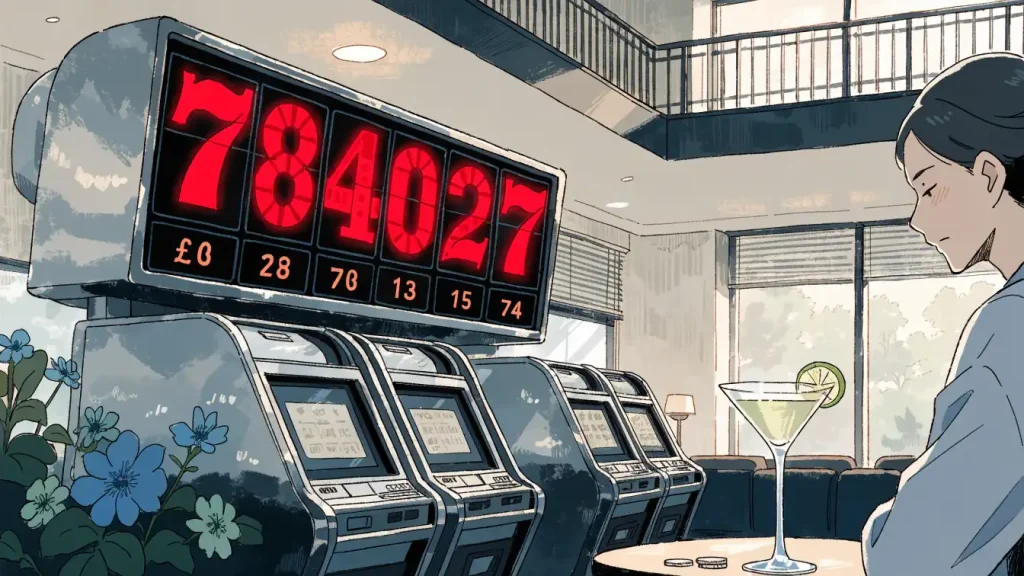
Progressive games pool part of wagers across connected machines, while base-game payouts and jackpot conditions remain distinct.
The Jackpot Meter: Where the Money Comes From
A progressive jackpot is not simply a large prize attached to a slot. It is a pot that grows as people play connected machines. A portion of wagers feeds the pool, so the figure on the meter reflects contributions gathered across play rather than a sum supplied solely by the casino as a fixed prize.
The arrangement changes the economics of the game. In an ordinary slot, the return is contained within its own design: wagers go in, and the game’s payouts come out according to its rules. A progressive slot adds another destination for part of the stake. The jackpot share is set aside from wagers, and the rest supports the base game and its other payouts. The meter is therefore not magic, though it is designed to look a little like it.
Progressive jackpot slots typically direct between 1% and 3% of each wager to the pool. That contribution may be small beside the whole stake, but it accumulates across connected slot machines. A single spin is one contribution among many; the visible total belongs to the collective activity of players using that linked game. The basic idea is communal, if not especially sentimental: a crowd helps build a prize that one player may eventually collect.
The percentage matters because it is not merely a decorative feature of the slot. It marks a division in the wager. When some of the money is assigned to the jackpot, less remains available for the base game’s ordinary returns. For progressive slots, the base game RTP often falls into the 88%–92% range, with the difference in payout going towards the jackpot pool.
RTP, or return to player, describes the proportion of stakes a game is designed to return over extended play. It is a theoretical measure, not a promise about what happens to an individual player’s balance. In a progressive slot, the headline prize and the base game return belong to the same financial design, but they are not the same thing. The jackpot contribution helps explain why the ordinary game can return less than a comparable slot without a growing prize.
Slots at UK Online Casinos: Games and Providers
This distinction can be easy to lose when the meter becomes the most visible number on the screen. A rising total gives the pool a public face: each new contribution appears to move the prize closer to importance, even though the meter says nothing about the value of the ordinary play around it. The jackpot attracts attention; the funding structure quietly determines what has been traded for that attraction.
The word “progressive” describes movement in the pool, not a steady improvement in the player’s prospects. Contributions add to a shared total, while the base game retains its own return profile. That makes progressive penny slots appealing to people looking for a small-stake way to take part in a game with a growing prize, but the penny label does not alter the underlying division. A smaller wager may mean a smaller contribution in cash terms; it does not turn the jackpot into a separate free extra.
Nor does the pool belong to the spin that happens to display it. Its size is the accumulated result of wagers made on connected machines. This is why a jackpot can appear strikingly large beside the stake placed on one play: the meter is recording activity beyond that single moment. The machine offers a local view of a much broader pot.
Amatic Games at UK Online Casinos: How They Work
The economics have a certain bluntness. Players fund the pool through play, and the prize is the reason the contribution can feel worthwhile. The game operator offers the structure; the growing total gives that structure its theatre. Meanwhile, the base game’s lower RTP reflects the fact that some value is being channelled elsewhere. A jackpot is not conjured from the screen.
For anyone comparing progressive slots online in the UK, the useful distinction is between the amount displayed and the way the game allocates each wager. A large meter tells how much has accumulated; it does not describe the base game’s return or how much of a particular stake reaches the pool. Those details belong to the game’s own information, where the contribution and RTP can be considered together rather than treating the headline prize as the whole proposition.
A progressive jackpot, then, is built from many small allocations across connected play. Its scale comes from accumulation, while its funding comes from the wager itself. The spectacle is visible. The arithmetic is quieter.
Jackpot Contribution
1%–3% of each wager
Typical Base Game RTP
88%–92%
Market
United Kingdom
One Jackpot, Many Operators
A progressive jackpot can appear on more than one casino site without becoming a separate prize on each. When operators carry the same progressive slot, they can connect to a shared network pool. The game title is the link: the participating sites offer access to the same jackpot rather than each maintaining an entirely independent version of it.
That distinction changes how a large advertised figure should be read. A pool shown on one site may reflect activity across the network, not wagers made only by that operator’s customers. The casino is the place where a player encounters the game; it need not be the sole source of the jackpot. A shared pool is a small piece of infrastructure with a wide social reach: many separate sessions, gathered into one public total.
This also explains why searching among progressive jackpot slots sites does not necessarily reveal different prizes. Several operators may list the same game and display the same network jackpot. The number of sites carrying it is not the number of independent pools. Nor does a Bitcoin payment option, where one is offered, tell anything by itself about whether a slot joins a shared jackpot network. Payment method and jackpot structure are separate features.
Top Rated Online Casinos in the UK: What Ratings Mean
For anyone comparing video slots with progressive jackpots, the useful distinction is therefore not simply the casino name or the size of a displayed meter. It is whether the same game is offered across participating operators and linked to a network pool. A list of titles, whether described as the most popular or the newest, cannot answer that question on its own. The game’s presence on several sites does not prove that every version is connected to the same pool; the relevant connection is between the shared game and the operators that carry it.
The same caution applies to the phrase “where to play”. A site may make a progressive slot available, while the jackpot itself belongs to a wider network. Availability on a site is not the same thing as ownership of the prize, and the operator’s branding does not turn a network total into a casino-specific fund. The arrangement is less like a shop putting its name on a prize and more like a window onto a common meter.
A win can bring a different set of questions from those raised by the game screen. A large progressive jackpot withdrawal may involve additional identity or account checks. A specialist review also describes some large awards as being paid in structured instalments over several years, rather than as a single immediate transfer. These are matters to establish from the operator’s terms and the handling of the particular award; they should not be inferred from the size of a figure on a screen.
Payment routes can affect the practical wait, though published estimates are not universal promises. A specialist review gives debit-card withdrawals a range of one to three working days, describes e-wallet payments as potentially taking hours, and puts bank transfers at three to five working days or longer. Those timings concern withdrawal processing, not the time required to verify a large jackpot claim. Verification and payment are separate stages, and a displayed balance does not settle either one.
A shared jackpot pool can be accessed through multiple casino sites if they carry the same progressive slot game.
This is where a network jackpot’s abstract scale meets ordinary administration. A shared pool may gather attention across operators, but any winning claim still has to be associated with a particular account and handled through the operator involved. Extra checks can be part of that process; instalments, where used, can make the final payment a sequence rather than an event. The spectacle is collective. The paperwork is not.
The word “shared” can sound frictionless. It describes the pool’s reach, not the route by which a winner receives an award. A jackpot can be common across participating sites while verification and withdrawal remain practical matters for the operator handling the claim. That difference is easy to miss when the largest number is the only one illuminated.
When a Progressive Jackpot Is Actually in Play
A slot can display a progressive jackpot without making that prize available on every spin. The label describes a jackpot that can grow; it does not, by itself, explain how a player becomes eligible to win it. That depends on the game’s rules. In this respect, a progressive feature is less a promise than a condition attached to the play.
Some progressive jackpots are awarded through a random trigger. The game may select a qualifying spin without requiring a particular symbol combination to land. In other slots, the jackpot depends on a specified combination, or on reaching a bonus round where the jackpot can be won. These are different routes to an award, and the game information is where the relevant conditions should be set out.
Classic Slots Online UK: How Reels and RNGs Work
The distinction matters because ordinary slot outcomes and jackpot eligibility are not necessarily the same thing. A spin can produce a base-game win without activating the progressive prize; conversely, a random-trigger format need not announce its selection through a familiar winning line. The visible reels are only part of the arrangement. What counts is the trigger the game has defined.
That can make a progressive slot feel strangely quiet. A jackpot counter may remain on screen while ordinary spins come and go, but the display does not establish that each spin has the same route to the top prize. In one game, a particular combination may be central; in another, the decisive event may be a random selection or entry into a bonus feature. The animation tells its own story. The rules tell the useful one.
The bet can affect eligibility
A specialist review reports that some random-trigger progressive games set a minimum bet for qualification for the highest jackpot tier. That is a condition attached to particular games, not a rule that can be assumed to apply across progressive slots. The review’s account also cannot stand in for the current rules of a game: eligibility should be understood from the information presented for that specific title.
This is a separate question from whether a spin can win something in the base game. A lower stake might still produce an ordinary result while not qualifying for a particular jackpot tier, where the game imposes that condition. The distinction is easy to miss when the jackpot display is more prominent than the small print. The tier matters.
Do
- Check the specific game rules for jackpot triggers
- Verify if a minimum bet is required for certain tiers
- Review the operator’s terms for withdrawal processes
Don’t
- Assume a rising meter means a win is imminent
- Treat a jackpot display as a guarantee of eligibility
- Conflate network totals with site-specific funds
The practical test is therefore not simply whether a slot carries a progressive jackpot, but what must happen for that jackpot to be awarded. The game’s rules should identify whether the trigger is random, tied to a combination, or connected to a bonus round. They should also state whether a qualifying bet applies to a jackpot tier. Without that detail, the presence of a meter cannot settle the question.
This is why two games described in the same broad category may behave quite differently. One can make the jackpot available through a random event; another can attach it to a defined combination or bonus entry. Even where the trigger is random, eligibility may have its own terms. The word “progressive” does not erase those distinctions.
There is a small cultural oddity in the design: the largest prize often occupies the brightest corner of the screen, while the condition that governs access sits in the game rules. The spectacle is immediate; the qualification is procedural. A casino slot has always been a machine for making rules feel like theatre. The jackpot is where the theatre acquires a footnote.
For anyone comparing online slots with progressive jackpots, trigger conditions are more revealing than the shared label. One game may turn on chance within the game’s own system; another may depend on a named outcome or a bonus feature. The jackpot is only actually in play when the stated conditions for that game are met.
Free Spins, Demo Play and the Small Print
Trying a progressive slot without staking cash can mean two quite different things: opening a demo version, or using free spins supplied by an operator. They may look similar on screen, but they do not offer the same thing. A demo is a way to see how a game behaves with virtual credits; a promotional spin is governed by its own terms and may carry restrictions on what happens to any winnings.
Elk Studios Casinos in the UK: What Can Be Verified
In demo mode, the jackpot meter can be part of the display without representing a prize available for withdrawal. Virtual play can show the reels, features and interface, but it does not establish that a real-money spin would qualify for the same jackpot. The distinction matters particularly with progressive slots, where eligibility can depend on the conditions of the live game. A practice balance is not a cash balance.
Some games can be opened in a browser without a separate download, but availability depends on the game and the operator’s site. Where a demo option appears, it can help identify whether the pace and features suit a player before money is involved. It cannot reveal a reliable route to a jackpot or predict what a later spin will do. The theatre is available; the stake is not.
Free spins are less straightforward. A specialist review reports that offers involving progressive slots may cap winnings in the £50–£100 range, while most free-spin promotions are limited to non-progressive games. That is a report about offers, not a rule applying to every operator. The game list attached to a promotion matters: a free spin described broadly as a casino offer may not be usable on the progressive slot that caught the eye.
No-deposit bonuses have another layer of conditions. A specialist review reports wagering requirements of 40x–60x and maximum withdrawal caps of £50–£100 for winnings from such offers. Those figures should not be mistaken for universal terms. The operator’s promotion rules determine which games count, how wagering is calculated, whether a cash-out cap applies and when an offer expires. A bonus balance can therefore be less like a gift than a small contract written in the margins.
Attention
Demo play uses virtual credits and does not establish that a real-money spin would qualify for the same jackpot.
For anyone comparing free ways to try progressive slots, the useful distinction is not simply “free” versus “paid”. Demo play offers familiarity without a cash prize; a promotional spin may produce withdrawable winnings only if its terms allow it and their conditions are met. Neither turns a progressive jackpot into a guaranteed feature of the offer. And neither makes a list of supposedly “best” games meaningful without checking whether those games are actually included.
The small print is the game within the game.
Real-Money Play Under a British Licence
Real-money progressive slots sit inside the same licensing system as other online casino games. In Great Britain, the UK Gambling Commission is the sole regulator for commercial gambling. Its reach follows the customer: a remote operator offering gambling to people in Great Britain needs the relevant Commission licence, even if its key equipment is somewhere else. A server’s geography does not make the regulatory question disappear.
The distinction matters because “online casino” is not, by itself, a mark of legal standing. A site serving British customers for real money must hold a current UK Gambling Commission operating licence. The Commission issues operating licences to businesses and personal licences to individuals carrying out regulated roles. The first concerns the company’s permission to provide gambling; the second applies to people in specified positions. They are different instruments, not interchangeable badges.
Online Craps in the UK: Casino Roles and Limits
Before depositing, the operator’s licence can be checked on the Commission’s public register. That is a more useful test than a logo in a footer: a logo is easy to display, while a licence is a regulatory status. UKGC-licensed operators must also verify a customer’s age before allowing a deposit. Online gambling is legal for adults aged eighteen and over when it takes place through an operator holding the appropriate UK licence.
The rules reach into the design of play, too. For online slots, the amount staked in a single game cycle cannot exceed £5 for customers aged twenty-five and over, or £2 for those aged eighteen to twenty-four. The £5 limit for all adults took effect on 9 April 2025, before the lower limit for younger adults was set out separately. A progressive jackpot does not create an exception to those limits. The prize may be unusual; the regulatory frame is not.
Licensed operators must offer tools intended to keep gambling within chosen boundaries, including deposit and loss limits, session reminders and self-exclusion, alongside access to support. New customers must be prompted to set a financial limit before making a first deposit, and account-level controls must remain accessible. These are not decorative features of a responsible-gambling page. They are part of the conditions under which remote gambling is offered.
The broader legal map is not perfectly identical across the country: the Gambling Act 2005 governs England, Wales and Scotland, but not Northern Ireland. For commercial online gambling in Great Britain, however, the Commission’s role is singular. That institutional arrangement makes the licence more than a consumer reassurance. It determines who may lawfully offer the game, and which safeguards and complaint routes belong with it.
A jackpot changes the prize. Not the licence.
How jackpots are funded
Progressive jackpots are built from many small allocations across connected play. A portion of wagers (typically 1% to 3%) is set aside from the stake to feed the communal pool, while the remainder supports the base game.
How a Progressive Slot Works Behind the Spin
A progressive jackpot is not built by one player’s session alone. Its pool grows through wagers made on slot machines connected to the same progressive game. Each wager adds a contribution, and those contributions accumulate into a prize attached to the network of linked machines.
That connection changes the scale of the game. A spin takes place on one screen, but the jackpot pool reflects play across multiple connected machines. The person watching the counter may be playing alone; the money represented by it has been gathered from wagers beyond that single session. A shared pool, then, is less a private pot than a running total formed by many separate acts of play.
Online, the same principle applies: connected versions of a progressive slot feed the pool as wagers are placed. The screen gives the process a local appearance, with symbols and a meter in front of one player, while the accumulating prize belongs to the wider linked game. The software joins those two scales: an individual spin and a pool that grows through play elsewhere.
This is the basic answer to how progressive slots work. The jackpot is not simply a fixed prize attached to a slot’s title. It accumulates as connected machines receive wagers. The game’s ordinary activity therefore has a second layer: play on the screen, and contributions entering the shared pool. That distinction explains why a jackpot can grow even when the player looking at it has just opened the game.
It does not, by itself, explain how a particular jackpot is awarded. Pool growth and the event that pays the prize are separate parts of the arrangement. A growing total tells the story of contributions; the game’s rules determine what must happen for that total to leave the pool as a win. Confusing those stages makes the meter seem more informative than it is. It records accumulation, not a promise about the next spin.
Barcrest Casinos in the UK: Availability and Licensing
Nor is a larger displayed total evidence that an individual player has caused the increase. The pool can reflect wagers from connected machines, so its movement belongs to the network rather than to one person’s sequence of spins. The counter makes collective activity visible, but does not reveal who contributed or how many separate sessions sit behind its rise.
There is a small social history in that design. The slot remains solitary in appearance, a private encounter with reels and buttons, while its largest prize is made collectively. Each player sees a narrow window; the pool gathers what happens beyond it. That is the mechanism behind the spectacle. The meter is communal, the screen is not.
Odds, Payouts and the Limits of Playing Tips
The odds of winning a progressive jackpot are not the same thing as the chance of landing an ordinary winning combination. A slot can return small prizes during play without awarding its headline jackpot; the two outcomes belong to different parts of the game. A screen full of activity, then, is not evidence that the largest prize is close.
The base-game return offers one way to understand the trade-off, but not a forecast for an individual session. Progressive jackpot slots often have a base-game RTP in the 88%–92% range, with some of the difference in payout directed towards the jackpot. RTP describes a theoretical return across extensive play, not a promise that a particular player will receive that share back, or that losses will be smoothed out over time. The jackpot may be conspicuous; the statistical horizon is not.
Main Conclusions
- Progressive jackpots grow through contributions from many connected machines rather than a fixed casino prize.
- Jackpot eligibility depends on specific game triggers like random events, symbol combinations, or bonus rounds.
- A higher jackpot potential often results in a lower base-game RTP.
- Always check the operator’s licence and specific game rules before playing real money.
The same distinction matters when asking how often progressive slots hit. “Hit” might mean any prize, a modest return, or the jackpot itself. Those are not interchangeable measures. A game’s general RTP cannot, by itself, tell how frequently each kind of win occurs. Nor does a run of losing spins establish that a jackpot is due. Random outcomes have no memory worth consulting.
Tips for playing progressive slots can help with practical decisions, such as understanding the game’s stated rules and deciding what amount is affordable to risk. They cannot improve the underlying odds. Choosing a particular time to play, changing a routine after a loss, or treating a jackpot meter as a countdown does not turn chance into a system. The meter is not a forecast.
A wager may also contribute to the progressive pool: these games typically direct between 1% and 3% of each stake towards it. That contribution helps explain why the jackpot can grow, but it does not reveal when it will be won or how likely a specific spin is to award it. A larger displayed prize is a larger possible payout, not evidence of a higher chance of collecting it.
The sensible reading of the numbers is therefore restrained. RTP describes a broad theoretical balance; jackpot odds concern a rarer, separate outcome; hit frequency needs its own game-specific information. Where that information is not stated, a confident prediction is theatre, not analysis.
Mystery Jackpots and Must-Hit-By Games
A progressive jackpot can arrive by more than one route. In some games, a random event triggers the award; in others, a particular symbol combination must appear, or a bonus round must be entered. The word “mystery” describes the uncertainty of the trigger, not a promise that every spin has the same practical conditions.
Amatic Online Casinos UK: Games, Terms and Licensing
That distinction changes what the game is asking of chance. A combination-based jackpot is tied to something visible in the rules: a specified outcome, or access to a bonus feature. A random-trigger award does not depend on landing that particular combination. Its arrival may be unexpected, though the game’s rules still define who qualifies and which prize tier is in play.
“Must-hit-by” games belong to the random-trigger family. The label points to a jackpot designed to trigger by a stated threshold, rather than one that waits for a fixed symbol pattern. It should not be read as a timetable or a prediction of when a particular spin will pay. The threshold is a feature of the game’s rules, not a signal that a win is imminent.
There is a further condition in some random-trigger games: a qualifying minimum bet may be needed to enter the highest jackpot tier. A specialist review has reported this condition for certain games, but it should not be treated as a general rule for every progressive slot. The game’s own paytable and rules are the relevant place to establish whether a stake qualifies, and for which tier.
This is why a list of progressive slots, however neatly arranged, cannot explain their behaviour on its own. Two titles may both advertise a growing jackpot while setting different routes to the award: one through a random trigger, another through a combination or bonus entry. The title and its jackpot label are not substitutes for the rules.
Is a large jackpot meter a guarantee of a win?
No. The meter reflects the accumulated total from many players; it does not indicate how close the next jackpot is or the probability of a specific spin winning.
Can I win a jackpot using free spins?
It depends on the terms. Many promotional free spins are limited to non-progressive games, and some progressive offers may cap potential winnings.
Does a minimum bet affect my chances?
In some games, a specific minimum bet may be required to qualify for the highest jackpot tiers.
The small print is part of the mechanism. It tells whether the award is random or outcome-dependent, whether a bonus feature is involved, and whether a particular stake is required for a top tier. Without those distinctions, “mystery” sounds more mysterious than it is. The rules do the less glamorous work.
Are Progressive Slots Better Than Regular Slots?
“Better” depends on what a slot is being asked to provide. A regular game keeps its appeal in the rhythm of ordinary play: symbols land, features appear, and the result is measured within the game itself. A progressive slot adds a second object of attention, a jackpot that grows beyond the individual spin. That can make the game feel charged with possibility, even when the base game is doing less of the work.
The trade-off is visible in the return figures. The base-game RTP for progressive slots often falls in the 88%–92% range, with the difference in payout directed towards the jackpot pool. RTP is a long-run measure, not a promise about what any particular session will return. Still, the distinction matters: the attraction of a growing prize comes with a less generous base-game return than the progressive title might otherwise have had.
For a player who values frequent features or a stronger return within the ordinary game, that exchange may feel lopsided. For someone drawn to the possibility of a much larger award, the jackpot may be the point, not an added decoration. Neither preference makes one format universally superior. They serve different appetites, and the game’s presentation can make the larger prize loom larger than the steady arithmetic beneath it.
This is also why “how to play” is not quite the same as “which one to choose”. The basic act of spinning may look familiar across both formats, but the decision comes earlier: whether the growing jackpot is worth accepting the altered base-game return. A player can enjoy the spectacle without treating it as evidence that a win is due or that the slot has become a better bargain.
Amatic Games at UK Online Casinos: What to Know
Progressive slots are not a superior version of regular slots; they are a different arrangement of rewards. Their promise is concentrated in the jackpot, while a regular slot’s appeal may rest more squarely on the game played from spin to spin. The choice is less a ladder than a fork in the road. One offers a larger horizon; the other, a different balance of play. No magic in the label.
Why the Progressive Games Menu Keeps Changing
There is no single, fixed menu of progressive slots across UK operators. The titles available at one casino may not appear at another, and a game listed today may disappear as providers revise their catalogues. A specialist review describes this variation, but a catalogue is a moving snapshot, not a permanent directory.
That matters when a particular title is in mind. Finding it at one operator does not establish that it is available everywhere, or that another site will add it later. The practical starting point is the game list on the operator’s own site; older articles and saved lists can describe a menu that has since changed.
The word “best” is less useful than it looks in this context. Without a stable selection, a ranking can go stale as soon as a provider updates its catalogue. A title’s presence on a list also says nothing by itself about whether it suits a particular player. A menu is evidence of availability, not a verdict.
The same caution applies to free-play searches. A progressive title may be shown in an operator’s catalogue, but that alone does not establish that a free version is offered there. Availability needs to be checked for the specific game and site; the label “progressive” does not settle how a particular version can be played.
This churn is a consequence of catalogues being maintained by providers and games being carried by individual operators. It is less like a national shelf, more like several shop windows whose stock changes on different schedules. No grand mystery. Just a catalogue that moves.
Can you win a progressive jackpot on a minimum bet?
Yes, if the game allows a minimum bet to qualify for the jackpot. Some games require a higher minimum stake to qualify for the highest jackpot tier.
What should I look for in a progressive jackpot slot?
Check the jackpot contribution and base-game RTP together, as well as how the jackpot is triggered and whether a minimum bet is needed to qualify for the top tier.
How fast are progressive jackpot withdrawals paid out?
Debit card withdrawals typically take 1–3 working days, e-wallet withdrawals can take hours, and bank transfers often take 3–5 working days or longer. Large jackpots may involve extra verification and structured payments over several years.
Do all UK casinos offer the same progressive jackpot games?
No. Game availability varies by operator and can change as providers update their catalogues. Where operators offer the same network-linked game, they can share its jackpot pool.
Is online gambling legal in the UK?
Yes. Remote gambling offered to consumers in Great Britain is regulated by the UK Gambling Commission, which licenses gambling businesses.